
Last Updated: July 16, 2026
Wall Pilates Free
Hello, today in this article, let us focus on Wall Pilates as unlike all the Pilates devices, it only requires a Yoga Mat and a Wall. Therefore, please tell us what Types of Wall Pilates we should add to our daily schedule for free. Let’s get started.
What Is Wall Pilates?
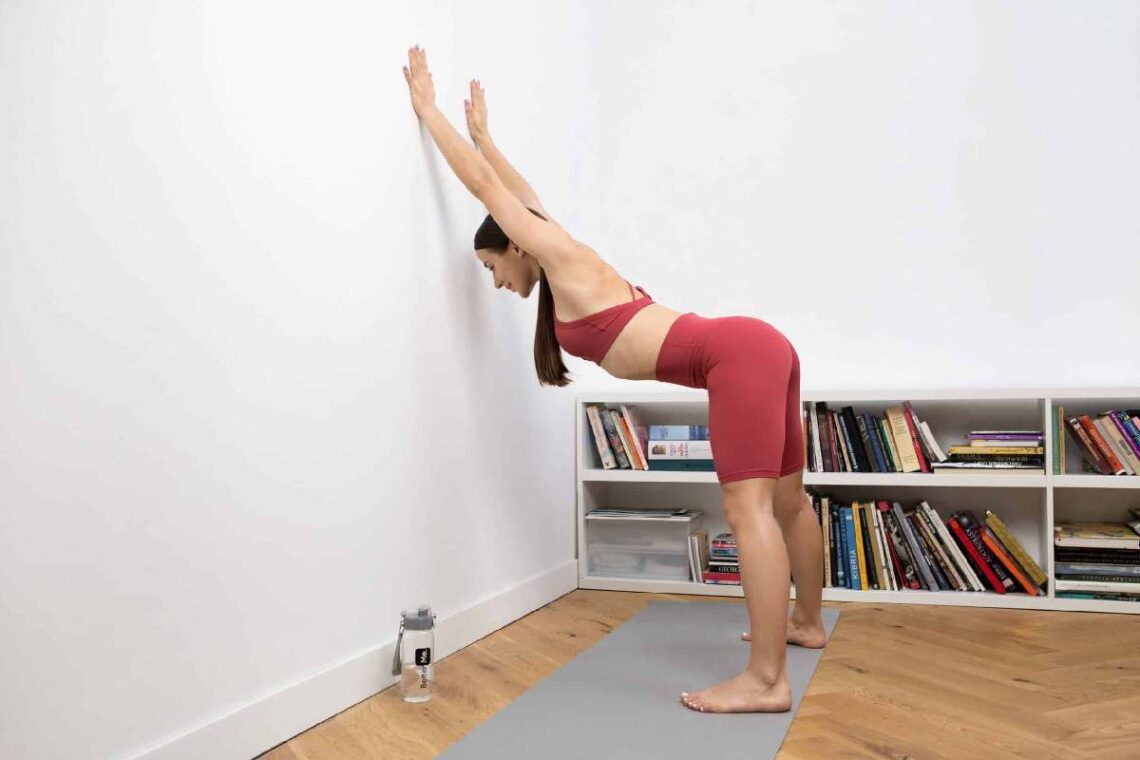
Wall Pilates is a modified form of Pilates exercise that uses a wall as a support tool instead of specialized studio equipment such as reformers or resistance machines. The wall provides stability, balance, and resistance, making it easier for beginners to learn proper posture and alignment.
Unlike traditional Pilates classes that may require expensive equipment or studio memberships, Wall Pilates can be performed at home for free using only a yoga mat and a clear wall space.
This method focuses on:
- Core strength
- Posture improvement
- Flexibility
- Balance and stability
- Muscle toning
The wall acts as a guide that helps maintain correct form while performing movements. Because of this, many people consider it one of the most accessible Pilates variations for beginners.
Why Wall Pilates Is Popular for Free Home Workouts
Wall Pilates gained significant popularity because it removes the biggest barriers to Pilates training: equipment and studio costs.
Typical Pilates studio classes may cost anywhere between:
| Service | Average Price |
| Single Pilates Class | ₹800 – ₹2500 |
| Monthly Studio Membership | ₹6000 – ₹15000 |
| Pilates Reformer Equipment | ₹50,000 – ₹2,00,000 |
With Wall Pilates:
- No equipment purchase is required
- No gym membership is needed
- Exercises can be done at home
The only things required are:
| Item | Average Price in India |
| Yoga Mat | ₹500 – ₹2000 |
| Wall Space | Free |
| Workout Apps (optional) | Free – ₹500/month |
This is why the keyword “Wall Pilates Free” has become increasingly searched by people who want low-cost fitness routines at home.
Benefits of Practicing Wall Pilates Daily
Adding Wall Pilates to your routine can provide several physical and mental benefits.
- Strengthens the Core
Most Wall Pilates movements activate the abdominal muscles, including:
- Rectus abdominis
- Transverse abdominis
- Obliques
A strong core improves posture and reduces back pain.
- Improves Body Alignment
The wall helps maintain correct body positioning. This reduces the risk of performing exercises incorrectly.
- Supports Low-Impact Training
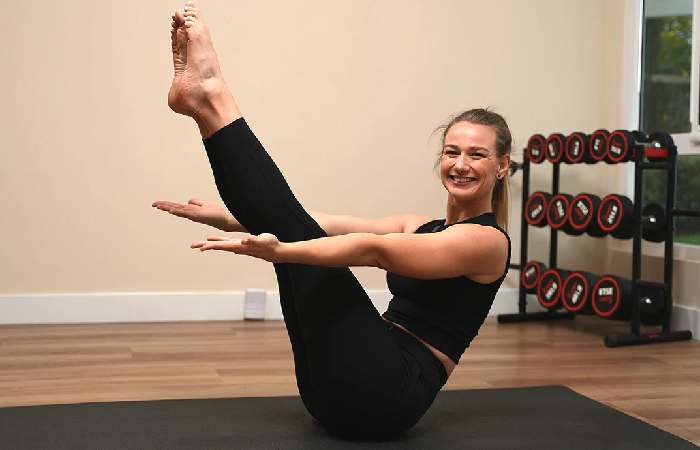
Wall Pilates is considered a low-impact workout, meaning it places minimal stress on joints. This makes it suitable for:
- Beginners
- Older adults
- People recovering from injuries
- Enhances Flexibility
Many exercises involve controlled stretching movements that improve flexibility in the:
- Hamstrings
- Hip flexors
- Lower back
- Shoulders
- Helps With Weight Management
While Pilates is not primarily a calorie-burning workout, consistent practice can:
- Increase muscle tone
- Improve metabolism
- Support fat loss when combined with proper nutrition
5 Simple Wall Pilates Exercises You Can Do at Home for Free
-
Single-Leg Knee Crunch
Instructions:
Stand approximately one foot away from a wall and then, lying flat on your back, position yourself on the floor. Sit upright on the wall with your applications at a right angle to the floor and your legs resting on the wall.
Bend your left leg at the knee and slide it across the wall, sliding your foot slightly off it, forming a diagonal with your left leg. Put your arms up in the air and, at the same time, pull up your lower back to engage the abdominal muscles.
It is where the barbell press exercise starts from Being able to find correct starting point is important when performing barbell press exercise.
While this movement bring your left knee towards your chest and at the same time draw your shoulders off the floor. Then, pull your arms toward the wall as close to your hips as possible.
Gradually bring the crunch down again to the original position – slowly. That’s one rep.
15 on the left leg then 15 for the right leg. (Verywellfit)
-
Wall Bridge and Calf Raise
Instructions:
Sit about one foot away from a wall, then lie flat on your back as you begin the exercise. Put your legs in tabletop position, your feet should be pressed against the wall. This is the position that you need to start from when beginning that exercise.
Bend your knees and press your feet to the wall to feel the contraction of your hamstrings and glutes, get your hips off the floor. abide by do not arch your back When your body gets aligned from the shoulders to the knees, raise your heels off the wall and do a calf raise.
Contrary to the movement described above, lower your heels to the wall first, and then your hips to the floor to start the next repetition. That’s one rep.
Do 15 reps.
-
Reach Backs
Instructions:
From there initiate in the high plank position touching the wall with the balls of your feet slightly wider than shoulder width apart. You should now find that your shoulders are directly over your wrists and that you make a straight line from your shoulders to your heals. This is your working posture to the start position of the activity.
Now roll onto your back and move your hips back to the Down Dog pose touching your right hand with the sole of the left foot or the ankle or the shin if it’s within your range.
Then bringing your hips back and down, sliding your right hand back to the floor to assume plank position back to the starting point. That’s one rep.
Again this one, stretching your left hand to your right ankle.
Do 10 reps on each side.
-
Marching Bridge
Instructions:
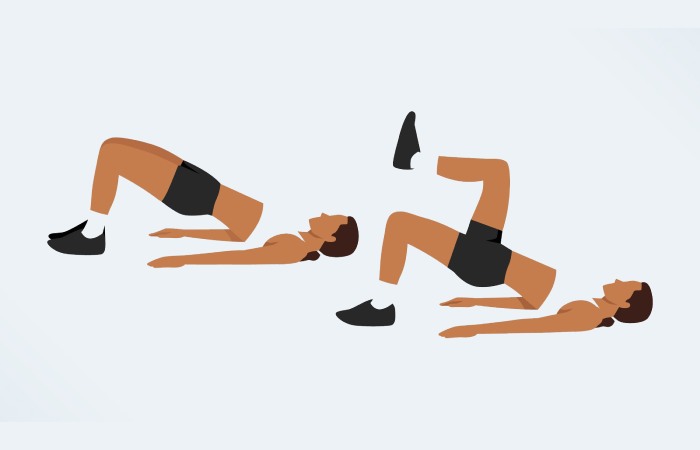
Stand about one foot from a wall and then lie flat on your back. Lay your flat on it allowing your legs to rest on it while being positioned in a tabletop manner. Push the feet into the wall, raise the hips from the floor till its parallel to the wall from the shoulders to knees. (Remember not to round your back or hump your back.) It is just how you stand in the beginning of this word association activity.
With as little hip movement as possible, keeping your hips level, bend your left knee and lift the left leg from the ground as if it’s being pulled towards your chest. Keep the same position in the knee, but this time moving at the hip until the leg is parallel with the trunk.
In this case you remain asked to reverse the motion to bring your left foot back to the wall. That’s one rep. Prolog with the right leg.
Do 10 reps on each leg.
-
Wall Sit and Calf Raise
Instructions:
Start with your back to the wall. Slide your feet out from under you to the distance of one foot while squatting down on your chairs with your back touching the wall. The joints of the knees and hip should be at ninety degrees to the ground and your feet should be parallel where one remain placed ahead of the other.
Pinch the hands towards each other as if placing your fists in a clap position with your palms facing outwards. This is the position which you begin with.
Standing in front of the squatted position, take your arms forward and up, touching the wall with your biceps behind your ears.
Lower your arms to return to the starting position, then, proceed to lift your heels of the floor, to perform a calf raise. Lower your heels unto the ground. That’s one rep.
Do 15 reps.
Additional Wall Pilates Exercises to Try
To expand your routine beyond the exercises you already listed, here are more movements commonly included in free Wall Pilates programs. (Pilates Method Alliance)
Wall Leg Slides
Instructions
- Lie on your back with your feet placed flat against the wall.
- Bend your knees at a 90-degree angle.
- Slowly slide one foot down the wall while keeping your hips stable.
- Bring the leg back to the starting position.
- Repeat with the other leg.
Repetitions
- 12 reps per leg
Benefits
- Strengthens hamstrings
- Improves hip mobility
- Activates lower abdominal muscles
Wall Hamstring Stretch
Instructions
- Sit sideways next to a wall.
- Lie down and swing your legs upward so one leg rests against the wall.
- Keep the other leg extended on the floor.
- Hold the stretch for several seconds.
Duration
- 20–30 seconds per leg
Benefits
- Improves hamstring flexibility
- Reduces lower-back tension
Wall Roll Down
Instructions
- Stand with your back against the wall.
- Slowly roll your spine downward one vertebra at a time.
- Let your arms hang freely.
- Slowly roll back up to the starting position.
Repetitions
- 10 reps
Benefits
- Improves spinal mobility
- Releases back stiffness
Wall Shoulder Press
Instructions
- Stand facing away from the wall.
- Place your arms against the wall at shoulder height.
- Press into the wall while engaging your core.
- Hold for a few seconds and release.
Repetitions
- 10–12 reps
Benefits
- Strengthens shoulders
- Improves posture
Weekly Wall Pilates Routine (Free Schedule)
A structured routine helps maintain consistency.
| Day | Workout Focus |
| Monday | Core exercises |
| Tuesday | Lower body strength |
| Wednesday | Flexibility and stretching |
| Thursday | Core stability |
| Friday | Full-body Wall Pilates |
| Saturday | Light stretching |
| Sunday | Rest or recovery |
Each session can last 20–30 minutes, making it manageable for beginners.
Best Free Apps for Wall Pilates
Although the exercises themselves are free, many people prefer using mobile apps for guidance.
| App | Platform | Price |
| BetterMe Wall Pilates | Android / iOS | Free trial |
| Pilates Workout at Home | Android | Free |
| FitOn | Android / iOS | Free |
| Nike Training Club | Android / iOS | Free |
These apps often include:
- Video instructions
- Workout timers
- Daily routines
- Progress tracking
Safety Tips for Beginners
When starting Wall Pilates, proper form is essential to prevent injury.
Maintain Neutral Spine
Avoid arching or rounding the back excessively.
Engage the Core
Keep abdominal muscles activated during exercises.
Move Slowly
Pilates emphasizes controlled movement, not speed.
Warm Up First
Spend at least 5–10 minutes warming up before beginning exercises.
Stop if You Feel Pain
Muscle engagement is normal, but sharp pain indicates improper technique.
Who Should Try Wall Pilates?
Wall Pilates is suitable for a wide range of individuals.
It is particularly helpful for:
- Beginners starting a fitness routine
- People working out at home
- Office workers with posture problems
- Individuals seeking low-impact exercise
- Those looking for affordable fitness options
However, people with severe back injuries or joint conditions should consult a healthcare professional before starting.
Equipment You May Use
Although Wall Pilates can be done completely free, some optional items can enhance workouts.
| Equipment | Purpose | Approx Price |
| Resistance Bands | Increase exercise difficulty | ₹300 – ₹800 |
| Pilates Ball | Improve balance and stability | ₹400 – ₹900 |
| Foam Roller | Muscle recovery | ₹600 – ₹1500 |
| Yoga Mat | Comfort and grip | ₹500 – ₹2000 |
These are optional and not required for beginners.
Common Mistakes in Wall Pilates
Beginners often make several mistakes that reduce the effectiveness of the exercises.
Using Momentum
Pilates movements should be slow and controlled.
Incorrect Foot Placement
Feet should remain properly aligned against the wall to maintain balance.
Holding Breath
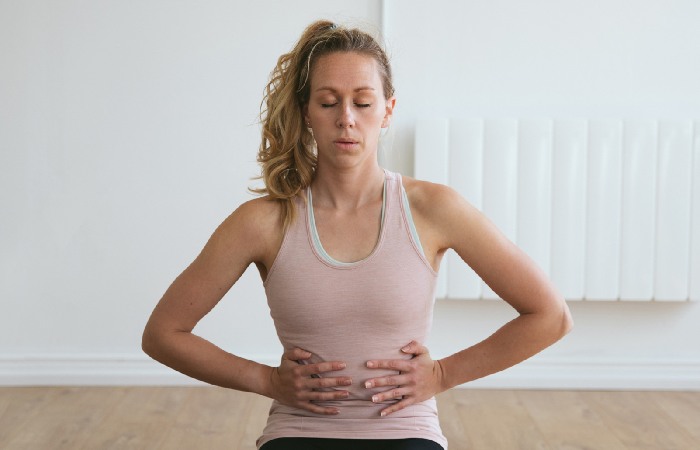
Breathing is a core principle in Pilates.
Inhale during preparation and exhale during effort.
Skipping Recovery
Rest days are necessary to allow muscles to recover and grow stronger.
How Long Until You See Results?
Results depend on frequency and consistency.
| Practice Frequency | Expected Results |
| 2–3 weeks | Improved flexibility |
| 4–6 weeks | Core strength improvement |
| 8–10 weeks | Visible muscle tone |
Most trainers recommend practicing Wall Pilates at least 3–4 times per week.
Conclusion
Wall Pilates is a practical and accessible way to stay active without the need for expensive equipment or gym memberships. By simply using a wall and a yoga mat, individuals can perform a wide range of exercises that strengthen the core, improve flexibility, and enhance overall body balance.
The exercises discussed in this article, including movements such as Single-Leg Knee Crunch, Wall Bridge and Calf Raise, Reach Backs, Marching Bridge, and Wall Sit with Calf Raise, demonstrate how effective a simple home workout routine can be. These exercises target multiple muscle groups and can be easily incorporated into a daily fitness schedule.